
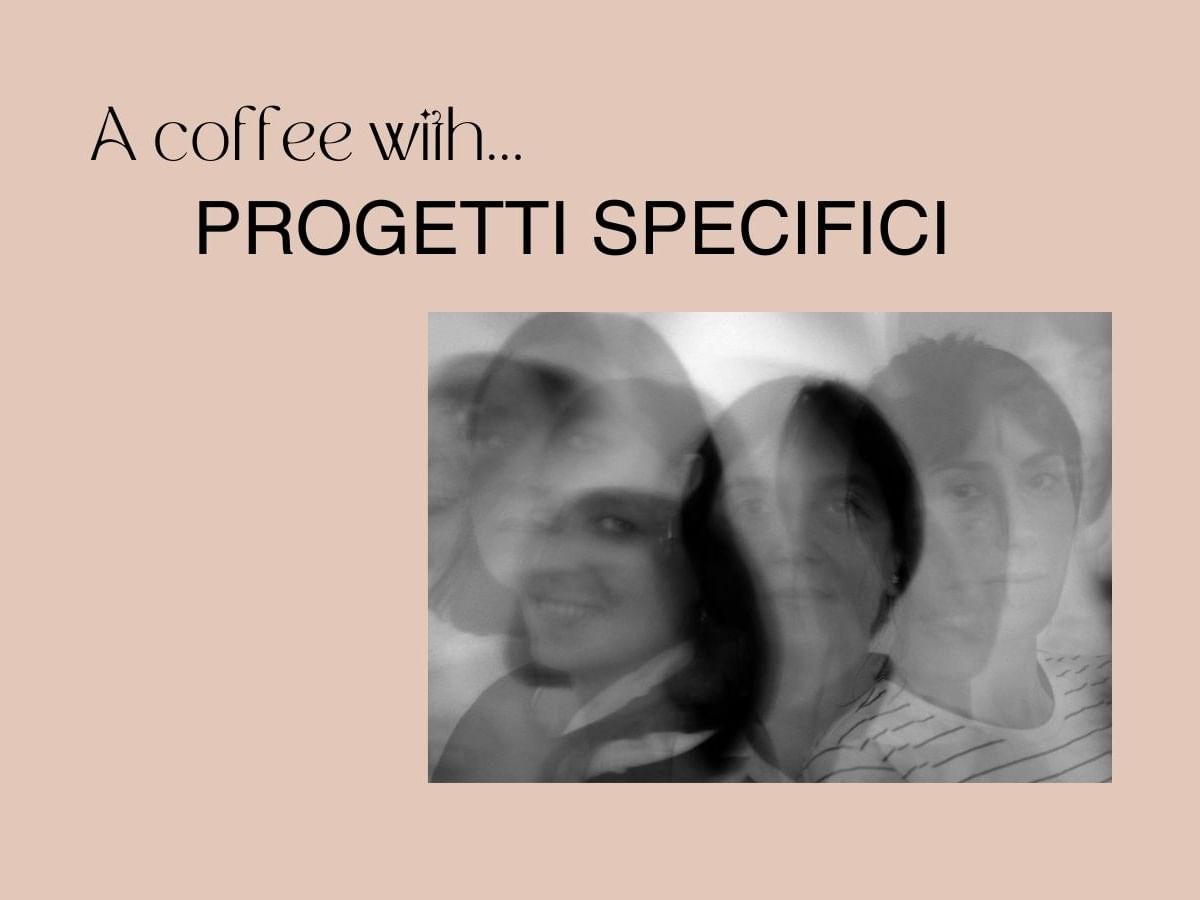
A coffee, the light streaming through the glass windows, and a moment with Progetti Specifici.
Anita Donna Bianco, Caterina Filippini, and Silvia Margaria together are Progetti Specifici. They work on the creative process, the birth and growth of ideas within the cultural and artistic fields. They generate content that becomes stories and memories, using different mediums because they believe that the intersection of disciplines produces something that no single discipline could ever achieve on its own.
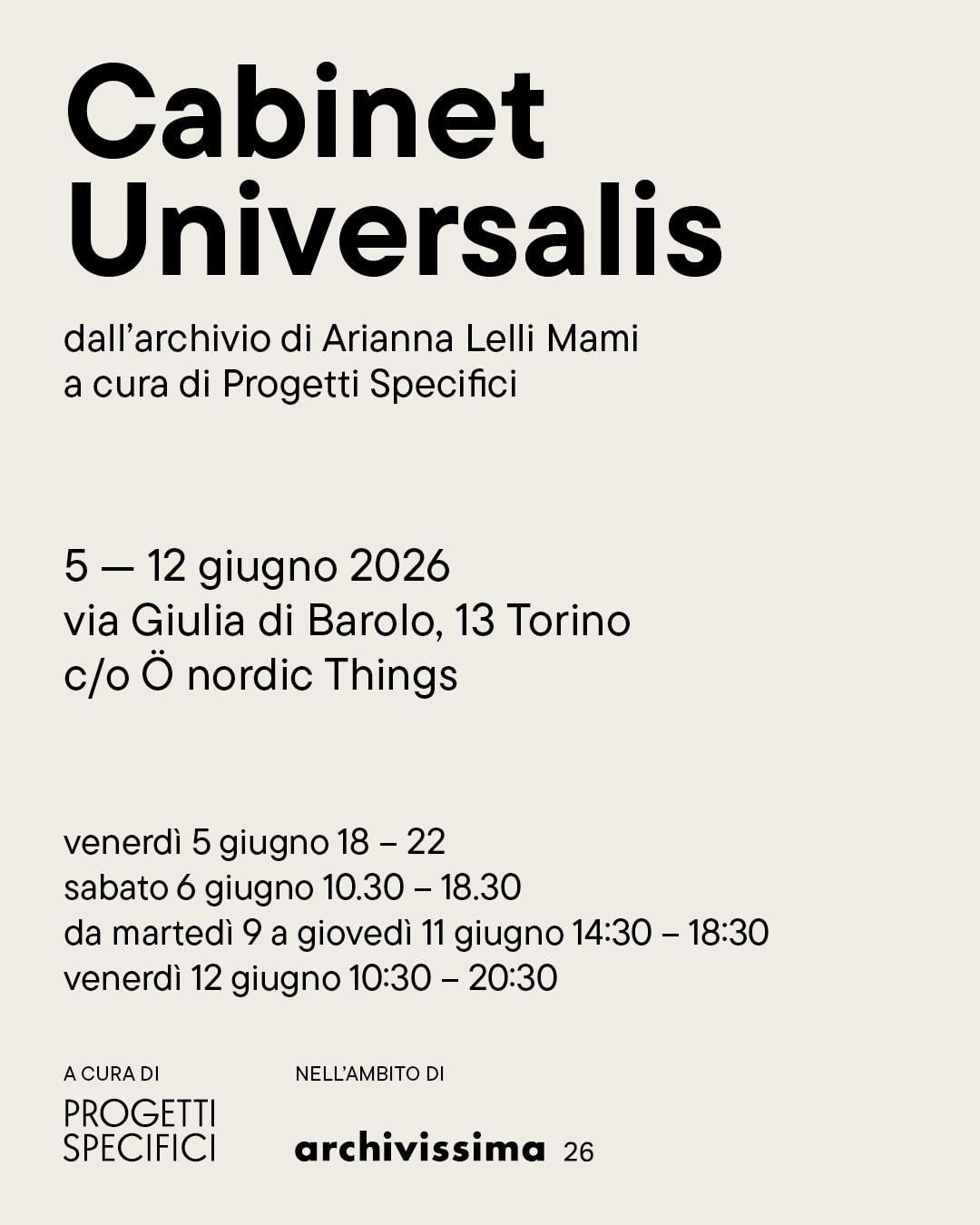
On the occasion of Archivissima 2026, from June 5 to 12, 2026, DUPARC supports the exhibition curated by Progetti Specifici at the Ö Nordic Thing space: a journey into the intimate archive and independent research of Arianna Lelli Mami. At the heart of the exhibition project are her Cabinet Universalis and a universe of ceramic micro-architectures, miniature theaters, and stages where natural fragments, relics, and images are uprooted from their original context and restored to a new poetic order. It is an invitation to slow down and rediscover the time of looking, resonating perfectly with the theme of this year's festival, “Quello che non c’è” (What is not there). Here, emptiness is not an absence, but a structural tension—a necessary pause between forms in which matter itself becomes language and, in the silence, speaks to us about ourselves.
Every project is born from a state of mind. If you had to describe the atmosphere or the inspiration behind your work, what would it be?
«The creative process has a phase that goes unseen. It comes before the result, lasts much longer, and almost no one talks about it. That intermediate time, made of attempts, second thoughts, and wrong turns until the right one is found, is what interests us the most. We want to tell the story of what happens when an idea is not yet a finished work and everything is still open. Hardly anyone shows it, perhaps because it seems unpresentable, or perhaps because we are used to seeing things already completed. We decided to stop right there and make it accessible. We do this through archives as well, which for us are living material to be put back into circulation and made present.»
If your entire professional (and personal) history had to be summed up in a single image, object, or material that deeply represents you, what would it be and why?
«A large table where things accumulate over time and somehow talk to each other. Photographs next to handwritten notes, cut-outs alongside audio recordings, materials from different eras that were never meant to meet and yet find themselves there, layered one on top of the other. It is the image that comes closest to what we do: keeping together things that risk being lost, finding the thread that connects them, and restoring them in a form that makes sense today.»
This magazine is flipped through by travelers, curious minds, and guests who cross paths with your work almost by chance. What is the thought, impression, or small question you hope to leave with those who stop to observe your project?
«Anyone flipping through this magazine is already, in some way, a curious person. They are in a new place, they have slowed down their pace, and they are looking at things they weren't explicitly searching for. It is exactly the right moment to ask oneself: whose story is this? The stories of places, people, and creative processes always belong to someone, but they become something more when they find someone willing to listen to them. We hope to leave that small question hanging. A curiosity, the desire to look for the stories that usually don’t reach us.»
Turin is a city of many souls. As locals, is there a corner of the city, a small ritual, or a discovered detail (or one loved forever) that you would recommend experiencing to savor its true essence?
«There are two places, both on Via Napione in the Vanchiglia district, that you don’t just stumble upon by chance. You have to look for them, and perhaps that is precisely what makes them so Torinese. The first is Casa Mollino, which the architect designed in the 1960s without ever living there for a single day. When you step inside, you feel as though you’ve walked into a time that isn't your own. The fabrics, the shapes, the light—everything is calibrated to a precise desire. The second is the Casa Museo Carol Rama: a painter, Torinese, unconventional, and one of the freest voices of the Italian twentieth century. Entering means understanding Turin's capacity to keep its best things hidden. Both can be visited by reservation only.»
As partners and locals, what does DUPARC represent to you, and what is the nuance of this place that fascinates you the most when you cross our threshold?
«DUPARC is one of those places we’ve known forever, yet every time you walk in, you notice something you hadn't seen before. Perhaps because it is built on a logic that isn't that of the classic hotel: there is an art collection that flows through the common spaces as if it had always been there — Licini, Accardi, Carol Rama, Salvo, Mario Schifano — without captions or guided paths. The works sit in the very same rooms where people eat or wait for someone, and this radically changes the way you look at them. That is what fascinates us the most: DUPARC doesn’t explain itself; it lets you look and understand on your own.»
Discover more: www.progettispecifici.com - @progetti_specifici